Are 4-Inch Thick Filters Like the 12x18x4 Worth the Upfront Cost?
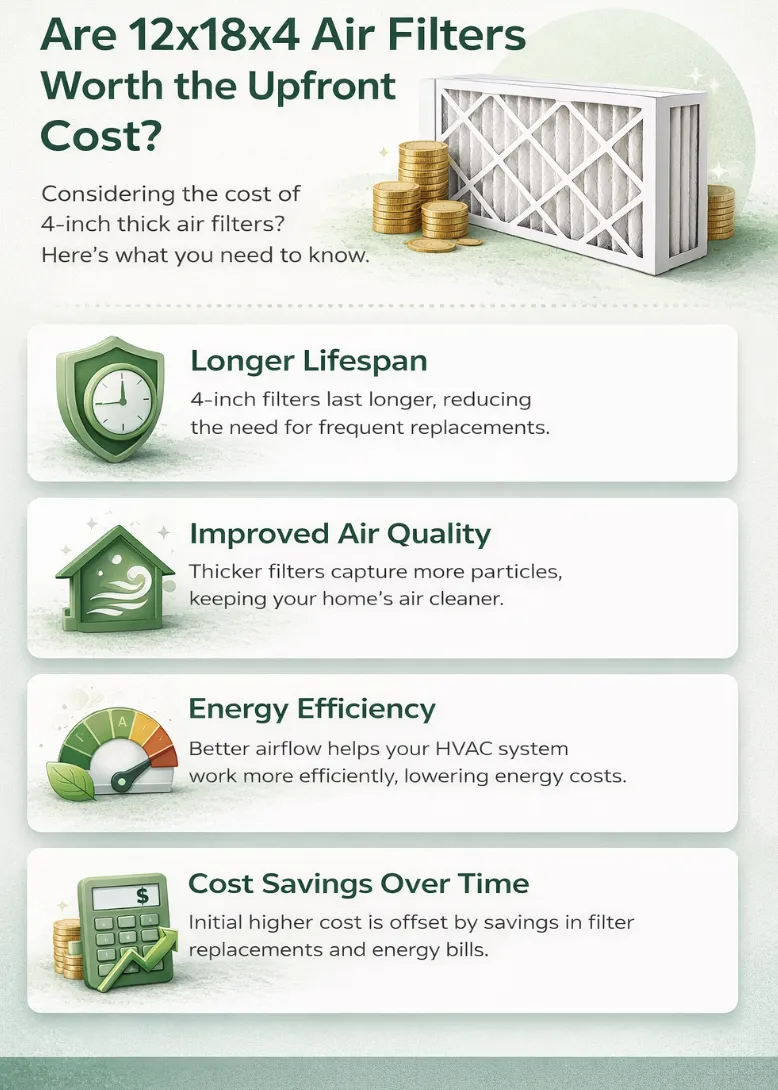
After manufacturing air filters for over a decade, we've watched the same decision play out millions of times — and the answer is consistently yes. A 12x18x4 costs more at checkout. What it buys you is more filter media, longer run cycles, less strain on your HVAC system, and a lower cost per day of use than any 1-inch alternative can match. The upfront price is real. So is the gap in performance, system protection, and long-term value. This page breaks down exactly what a 4-inch filter delivers that a thinner option simply can't — and why customers who make the switch tell us they wish they'd done it sooner.
Quick Answers
Are 4-Inch Thick Filters Like the 12x18x4 Worth the Upfront Cost?
Yes — and after manufacturing filters for over a decade and working with millions of homeowners, the answer is consistent across every household type and climate. Here's the short version of why:
A 4-inch filter contains significantly more pleated media than a 1-inch alternative — more surface area, longer run cycle, higher sustained particle capture
A single 12x18x4 can replace two to twelve 1-inch filters over the same period, depending on household conditions
The cost per day of use favors the 4-inch filter — even before factoring in energy savings and reduced system wear
A clogged 1-inch filter restricts airflow, forces your system to work harder, and accumulates debris on the evaporator coil — risks the 12x18x4's longer run cycle is specifically designed to reduce
The EPA recommends MERV 13 as the residential filtration threshold for fine particle removal — a rating the 12x18x4 is available in and a 1-inch fiberglass filter cannot come close to matching
The homeowners who spend the least on HVAC maintenance over time are almost never the ones running the cheapest filter.
They're the ones running the right filter consistently — and the 12x18x4 is built for exactly that.
Top Takeaways
A 4-inch filter contains more pleated media than a 1-inch alternative.
The result: higher particle capture, longer run cycles, and a lower cost per day of use.
The upfront price gap narrows fast. Fewer annual replacements, lower energy consumption, and reduced system wear make the 12x18x4 the better long-term value.
The EPA confirms indoor air runs two to five times more polluted than outdoor air.
A properly rated 12x18x4 on a consistent replacement schedule is one of the most direct ways to address that.
A clogged filter forces your system to work harder, dirties the evaporator coil, and accelerates premature failure.
The 12x18x4's longer run cycle is specifically designed to reduce that risk.
After a decade of manufacturing and millions of customers, the pattern is clear: homeowners who spend the least on HVAC maintenance run a properly rated 4-inch filter and never let it go past its limit.
What Makes a 4-Inch Filter Different From a 1-Inch Filter
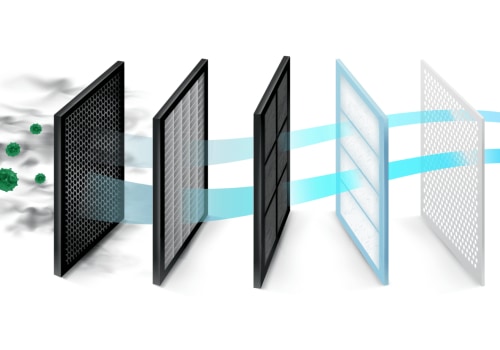
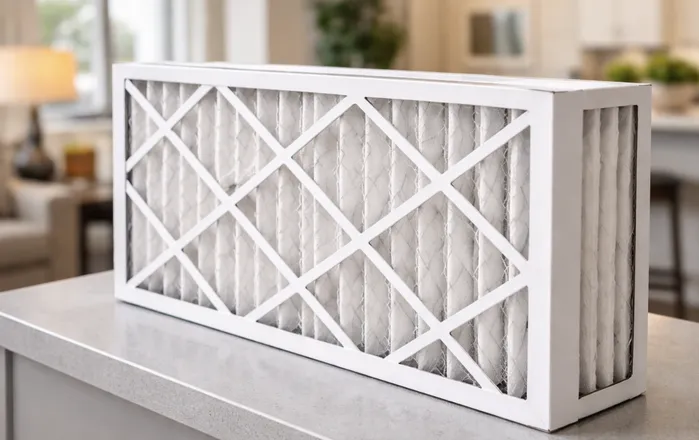
The most visible difference between a 4-inch filter like the 12x18x4 and a standard 1-inch option is depth. But that extra depth isn't just physical — it translates directly into filtration capacity, run time, and system performance. A 4-inch filter contains significantly more pleated media, which gives it a larger surface area to capture particles without restricting airflow. A 1-inch filter, by comparison, loads up faster, restricts airflow sooner, and needs replacing more frequently to keep your system running efficiently.
What the Upfront Price of a 12x18x4 Actually Buys You
The sticker price on a 4-inch filter is higher. What it delivers in return:
More filter media to capture dust, dander, pollen, and fine particles
A longer replacement cycle — typically 6 to 12 months versus 30 to 90 days for 1-inch filters
Consistent airflow that reduces strain on your blower motor
Fewer replacement purchases over the course of a year
Lower cost per day of use compared to thinner, cheaper alternatives
When you factor in how many 1-inch filters you'd go through in the same period, the 12x18x4 regularly comes out ahead on total annual cost — before you even account for the energy and maintenance savings.
How a 4-Inch Filter Protects Your HVAC System Over Time
From our manufacturing experience, one of the most underappreciated benefits of a 4-inch filter is what it does for the equipment running behind it. A 1-inch filter that loads up quickly and gets changed late — or not at all — forces your blower motor to work harder to pull air through a restricted surface. That extra workload accelerates wear on your system's components over time.
A 12x18x4 maintains cleaner airflow across a much longer cycle, which means:
Your blower motor runs at its intended load
Your evaporator coil stays cleaner between service visits
Your system reaches temperature set points more efficiently
Long-term wear on mechanical components is meaningfully reduced
The filter that costs more upfront is often the one that costs your system less over its lifetime.
The Real Cost Comparison: 4-Inch vs. 1-Inch Over 12 Months
Here is where the math shifts the conversation. A 1-inch filter on a 30-day cycle requires up to 12 replacements per year. A 12x18x4 on a 6-to-12-month cycle requires one to two. Even at a higher per-unit price, the 4-inch filter consistently wins on annual spend — and that's before factoring in the energy efficiency gains from better airflow and the reduced maintenance costs from a cleaner, less-strained system.
What Our Customers Tell Us After Making the Switch
After working with millions of homeowners, the feedback from customers who move from 1-inch to 4-inch filters follows a consistent pattern. They notice:
Fewer filter changes with no drop in air quality
Lower energy bills from improved system efficiency
Cleaner return vents and less visible dust accumulation
Greater confidence that their HVAC system is genuinely protected
It is the simplest answer we receive: they should have made the switch earlier.
Does it have the 12x18x4 4-Inch Right Filter to Your System?
The 12x18x4 is a special dimension used where the filter slot of the system fits into a 4-inch deep filter. Ensure that your HVAC system or air handler is designed with a filter cabinet of this depth before buying. In this eventuality, the 12x18x4 is one of the most economical long term filtration investments that can be made on such a system. Before switching, remember to look in your equipment manual, or call the manufacturer of your HVAC and determine if your system is compatible.
"After manufacturing filters for over a decade and watching millions of homeowners make the switch from 1-inch to 4-inch filters, the pattern is unmistakable — the filter that costs more at checkout almost always costs less over the life of the system, and the customers who understand that math never go back to thinner options."
Essential Resources on 12x18x4 Air Filters
Everything You Need to Make a Confident 12x18x4 Filter Decision — In One Place
Full 12x18x4 Filter Selection - All MERV Ratings and Pack Sizes in One Place
Shop FilterBuy is a filter manufacturer that offers the entire selection of 12x18x4 air filters at all MERV ratings, compares pack sizes, and orders at a discount, including free shipping.
The U.S. EPA's MERV Rating Guide — Understand Exactly What Your Filter Is Doing
The EPA explains what MERV ratings measure, why the number matters for your household, and why MERV 13 and above is recommended for capturing the fine particles most harmful to long-term indoor air quality. https://www.epa.gov/indoor-air-quality-iaq/what-merv-rating
FilterBuy's Complete MERV Rating Breakdown — Match the Right Rating to Your Home
This resource walks through every MERV level, explains what each one captures, and helps homeowners identify the right rating for their specific household — from everyday MERV 8 filtration to MERV 13 allergy and smoke protection. https://filterbuy.com/resources/air-filter-basics/all-about-merv-ratings/
The U.S. EPA's Guide to Air Cleaners in the Home — The Authoritative Reference for Residential Filtration
The EPA's consumer guide covers how HVAC filters work, how to choose the right filter for your system, and why thicker, higher-rated filters deliver meaningfully better performance for homeowners evaluating a 4-inch filter like the 12x18x4. https://www.epa.gov/indoor-air-quality-iaq/guide-air-cleaners-home
FilterBuy's MERV 8 vs. MERV 11 vs. MERV 13 Comparison — A Straightforward Side-by-Side Breakdown
This guide compares the three most common residential MERV ratings, details what each one captures, identifies which household situations each rating is best suited for, and explains how to confirm HVAC system compatibility before purchasing. https://filterbuy.com/resources/air-filter-basics/which-merv-rating-should-I-use/
The U.S. EPA Indoor airPLUS Filtration Technical Bulletin — Why Filter Depth and MERV Rating Both Matter
This EPA technical bulletin establishes MERV 8 as the residential minimum and explains why upgrading to a deeper, higher-rated filter like the 12x18x4 removes significantly more of the fine particles that most directly impact your family's health. https://www.epa.gov/sites/default/files/2020-06/documents/2019.11_tech_bulletin_filtration.pdf
The U.S. EPA's Introduction to Indoor Air Quality — The Data Behind Why Your Filter Choice Matters
This EPA resource documents why indoor air pollutant levels can run two to five times higher than outdoor levels — providing the essential context behind why a properly rated, consistently replaced 12x18x4 is one of the highest-impact purchases a homeowner can make. https://www.epa.gov/indoor-air-quality-iaq/introduction-indoor-air-quality
What the Data Actually Says About 4-Inch Filters, Indoor Air Quality, and Your HVAC System
After manufacturing air filters for over a decade and fulfilling millions of orders, we've had a front-row seat to what filter performance data looks like in real homes — not just in a lab. The research consistently backs up what we observe. Here are three statistics every homeowner evaluating a 12x18x4 should understand.
A MERV 13 Filter Removes at Least 50 Percent of the Smallest and Most Harmful Airborne Particles
The EPA confirms it. We see it on the manufacturing side every day. The gap between a 1-inch fiberglass filter (MERV 1–4) and a properly rated 4-inch filter isn't marginal — it's the difference between real filtration and the appearance of filtration. What this means for 12x18x4 buyers:
A 4-inch filter carries significantly more pleated media than a 1-inch alternative
More media means higher particle capture across a longer run cycle
The 12x18x4 is available in MERV 8, MERV 11, and MERV 13 — putting the EPA's recommended threshold within direct reach
Choosing the right MERV rating is one of the highest-impact filtration decisions you can make
Source: U.S. Environmental Protection Agency — Indoor airPLUS Filtration Technical Bulletin https://www.epa.gov/sites/default/files/2020-06/documents/2019.11_tech_bulletin_filtration.pdf
Indoor Air Pollutant Levels Can Run Two to Five Times — and Occasionally More Than 100 Times — Higher Than Outdoor Levels
The EPA has documented this consistently. It lands differently when you've spent over a decade manufacturing the filters responsible for addressing it. This isn't a worst-case scenario. It's the baseline for most American homes. What this means for 12x18x4 buyers:
A deeper, higher-rated filter like the 12x18x4 directly addresses the indoor air quality gap the EPA documents
A properly rated filter on a consistent replacement schedule is one of the most direct levers a homeowner controls
The upfront cost is modest relative to what the EPA's data shows is circulating in your home every day
No single home maintenance purchase addresses this problem as directly or consistently
Source: U.S. Environmental Protection Agency — Introduction to Indoor Air Quality https://www.epa.gov/indoor-air-quality-iaq/introduction-indoor-air-quality
A Dirty or Clogged Filter Reduces Airflow, Forces Your System to Work Harder, and Can Cause Premature Failure
The DOE states it plainly. We've watched it play out across countless customer interactions. Homeowners with unexpected HVAC repair costs almost never have a history of consistent filter changes. The ones who do rarely call at all. What this means for 12x18x4 buyers:
A 4-inch filter maintains cleaner airflow across a longer cycle than any 1-inch alternative
Fewer change intervals means fewer opportunities for the system to run on an overloaded filter
The longer run cycle of the 12x18x4 directly reduces the airflow restriction risk the DOE warns against
The filter that costs more at checkout consistently costs the system — and the homeowner — less over time
Source: U.S. Department of Energy — Air Conditioner Maintenance https://www.energy.gov/energysaver/air-conditioner-maintenance
You now have everything you need to make a confident decision about the 12x18x4. Here's exactly what to do next.
Confirm Your System Has a 4-Inch Filter Slot
Check your current filter for its dimensions printed on the frame
Look for a filter cabinet or slot that accommodates a 4-inch deep filter
If unsure, check your HVAC equipment manual or look up your system model online
A 12x18x4 requires a system designed for 4-inch depth — confirm fit before ordering
Choose the Right MERV Rating for Your Household
MERV 8 — Everyday dust, pollen, and larger particles. A solid baseline for most homes.
MERV 11 — Pet dander, mold spores, and finer particles. Ideal for homes with pets or mild allergies.
MERV 13 — Fine particles, bacteria, and smoke. Best for allergy sufferers or anyone prioritizing maximum indoor air protection.
When in doubt, check your HVAC manual for the maximum MERV rating your system can accommodate
Shop FilterBuy's 12x18x4 Filter Selection and Choose Your Pack Size
Browse available MERV ratings and pack sizes for the 12x18x4
Compare per-filter pricing across pack quantities
Select the pack that fits your household needs and replacement schedule
Larger pack sizes unlock the lowest per-filter cost
Note Your Current Filter's Installation Date
Write down the date your new filter is installed
Use this as your baseline for a consistent 60-to-90-day replacement schedule
Households with pets, allergy sufferers, or higher dust levels should target the shorter end of that range
Set a Replacement Reminder Before Your Order Arrives
Set a calendar reminder for 60 to 90 days from your installation date
Repeat it for every change going forward
A 4-inch filter delivers its full value only when replaced on schedule — not when it runs past its limit
Explore FilterBuy's Subscription Option to Lock In Additional Savings
Subscribers receive an additional discount stacked on top of standard pricing
Filters arrive automatically on a schedule matched to your replacement cycle
Your per-filter cost drops to its lowest point with zero extra effort required
Never run out, never overpay, never think about reordering again
Have questions about MERV rating compatibility or which pack size is right for your home? Our team manufactures these filters every day and is ready to give you a straight answer.
Frequently Asked Questions
Q: Why do 4-inch filters like the 12x18x4 cost more than standard 1-inch filters?
A: After manufacturing both filter types for over a decade, the answer is straightforward: you're paying for significantly more filter. What drives the price difference:
More pleated media than a 1-inch alternative
Greater surface area and particle-capturing capacity
A longer effective run cycle before replacement is needed
Q: How much longer does a 4-inch filter like the 12x18x4 last compared to a 1-inch filter?
A: Based on millions of filter cycles, a quality 4-inch pleated filter typically lasts six months to a year. A 1-inch filter lasts 30 to 90 days. What that means in practice:
A single 12x18x4 can replace anywhere from two to twelve 1-inch filters over the same period
This is the number that shifts the conversation most decisively for undecided customers
Q: Does a 4-inch filter like the 12x18x4 actually improve indoor air quality compared to a 1-inch filter?
A: Yes — and the difference is more significant than most homeowners expect. What the manufacturing side shows us:
A 4-inch filter carries considerably more pleated media
Greater media depth sustains higher particle capture across the entire run cycle
Dust, pollen, pet dander, mold spores, and fine particles are captured more consistently
Q: Will a 4-inch filter like the 12x18x4 work with my existing HVAC system?
A: A 12x18x4 requires a filter cabinet or slot designed for 4-inch depth. Confirm compatibility before ordering. How to verify your system is compatible:
Check the dimensions printed on your current filter's frame
Consult your HVAC equipment manual for accepted filter depth
Look for a dedicated filter cabinet — not a standard 1-inch return grille slot
Q: When you factor in everything — replacements, energy, and system wear — is the 12x18x4 actually cheaper over time than a 1-inch filter?
A: In our experience, yes — and often by a wider margin than homeowners initially expect. The true cost of running a 1-inch filter includes:
More frequent purchases across the year
Higher energy consumption from a system fighting restricted airflow
Accelerated wear on components that accumulate debris when an overloaded filter gets bypassed
See for Yourself Why the 12x18x4 Is Worth Every Penny — Shop FilterBuy's 4-Inch Filter Selection Today
The upfront cost pays for itself in fewer replacements, lower energy bills, and an HVAC system that runs cleaner and lasts longer. Make the switch to a 12x18x4 today and buy the last filter size you'll ever need to second-guess.
Learn more about HVAC Care from one of our HVAC solutions branches…
Filterbuy HVAC Solutions - Miami FL - Air Conditioning Service
1300 S Miami Ave Apt 4806 Miami FL 33130
(305) 306-5027
https://maps.app.goo.gl/Ci1vrL596LhvXKU79